It positively shattered the preconceived notion that “interviews are something people do.”
Enterprise Customer
Shunji Hayashi
Impact HD Inc.
Executive Officer, Head of Digital Transformation Promotion Division

Why We Chose Kikuvi
Q. Could you tell us why you chose Kikuvi?
The connection came through our parent company, Bain Capital, and through meeting Mr. Sato at a DataRobot event.
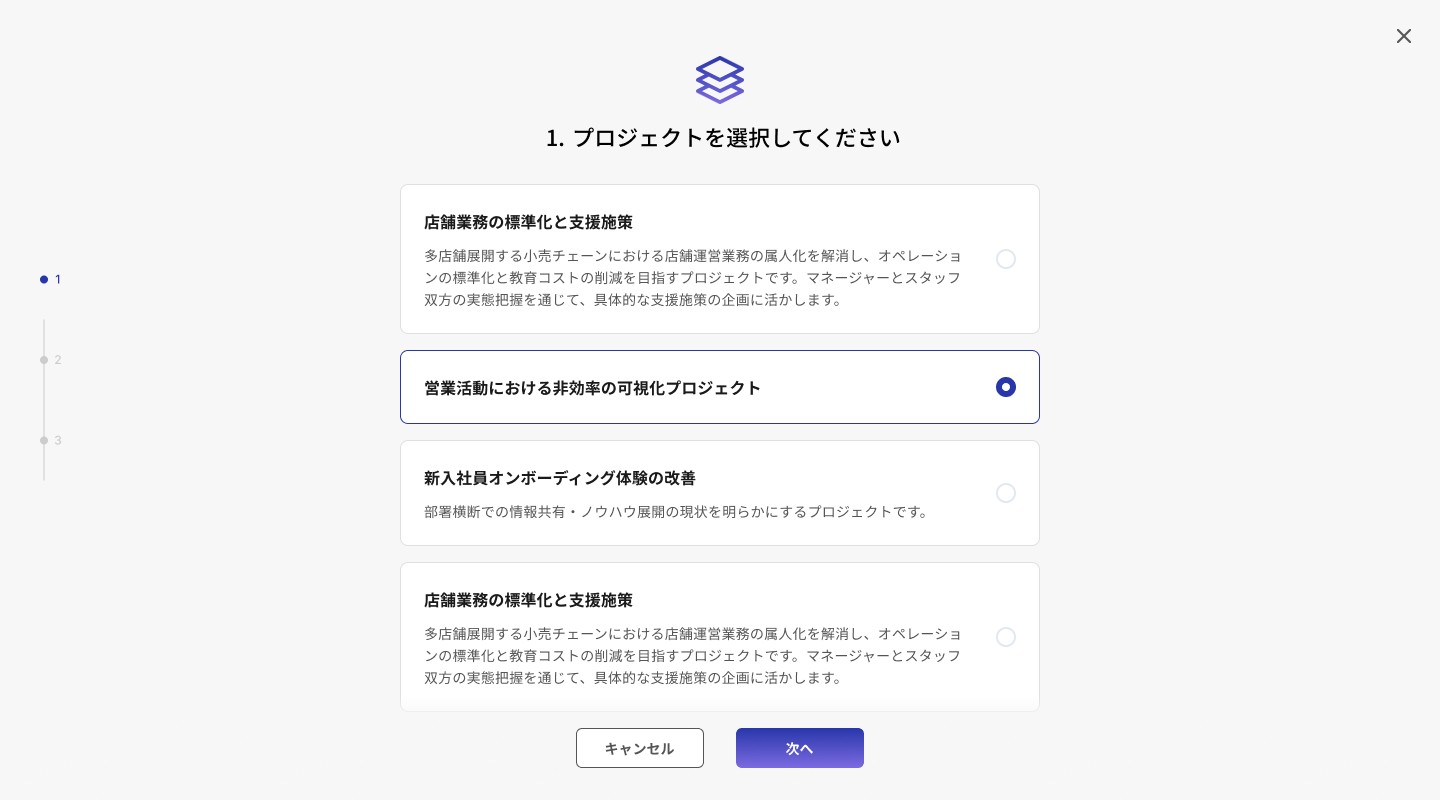
We had already identified interviewing as a major challenge. I was also responsible for systems engineering, and when advancing company-wide DX, interviewing each individual company one by one requires an enormous amount of time and effort. We were drawn to the fact that AI could help cover that area.
In addition, while we have a research company within the group, the industry has long been limited to two options: web surveys, which are easy but shallow, or depth interviews, which are insightful but expensive and labor-intensive. We felt that Kikuvi is a service that fits well in between those two. It provides higher-quality information than web surveys without the cost of depth interviews. We wanted to incorporate that as part of our solution.
The Limits We Had Reached
Q. In previous research and information gathering efforts, where did you feel you had reached a limit?
There are two points. In the DX area, while I can go onsite and speak directly with people, the target tends to be disproportionately management. However, the real issues are on the front line. It was extremely difficult to properly and deeply hear the voices of frontline staff and connect those insights to improvements.
Looking at the research industry as a whole, I feel the methods have remained stagnant for a long time. Against a rigid mindset of “this is the method for research,” I see great potential in exploring how far AI can enter this space. As a new perspective, I think it is a major opportunity.

“We are able to collect information that is clearly deeper than web surveys and of quality close to depth interviews, at remarkable speed.”
What Changed After Using It
Q. How have information quality and speed changed since you started using Kikuvi?
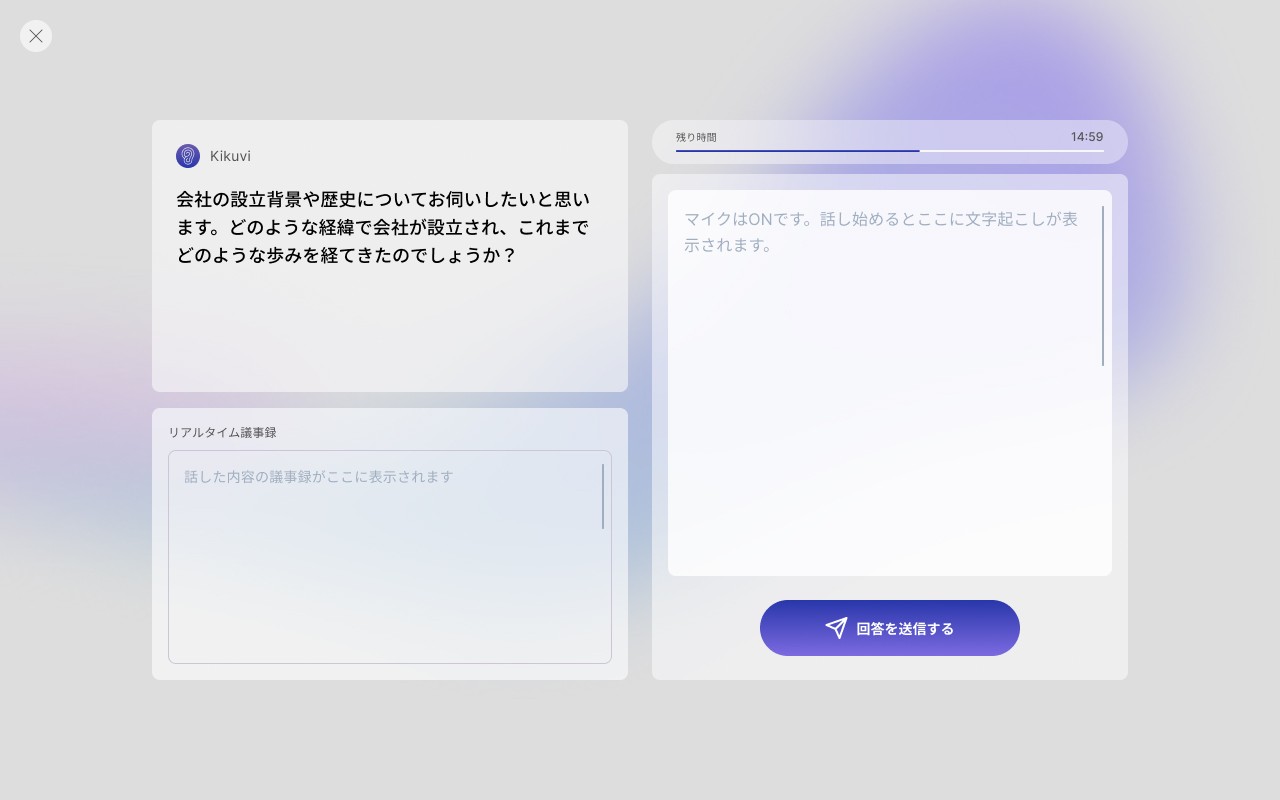
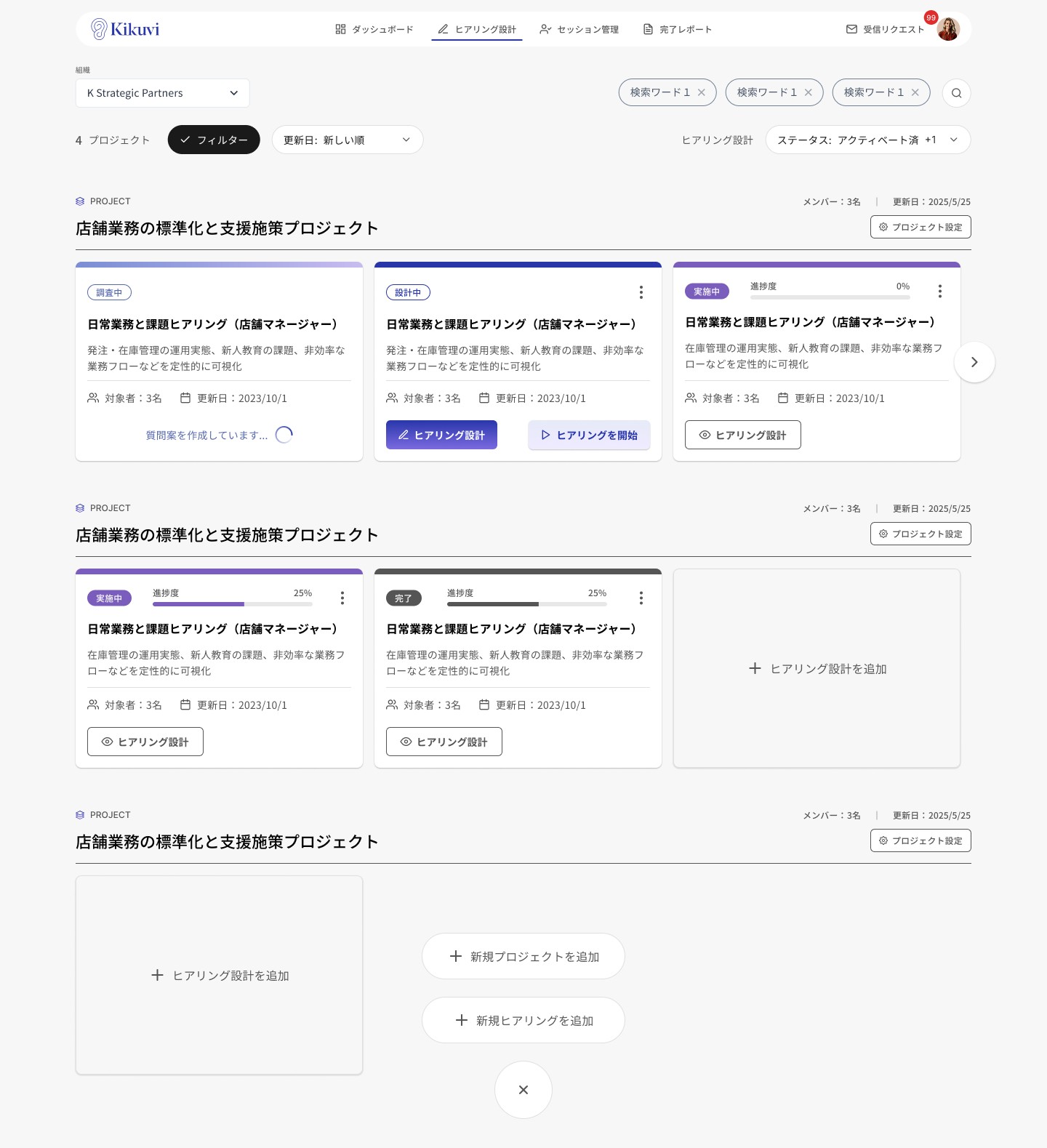
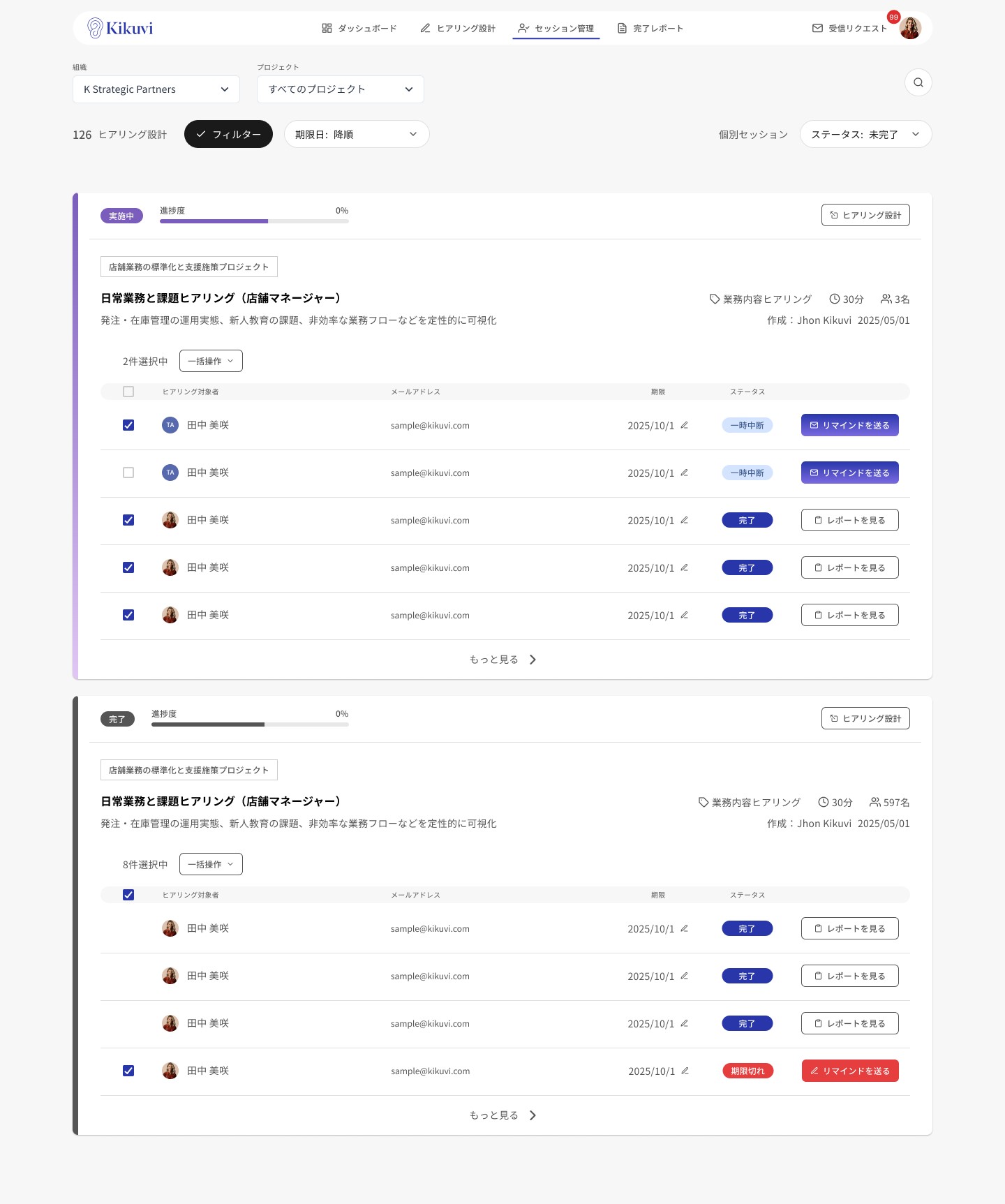
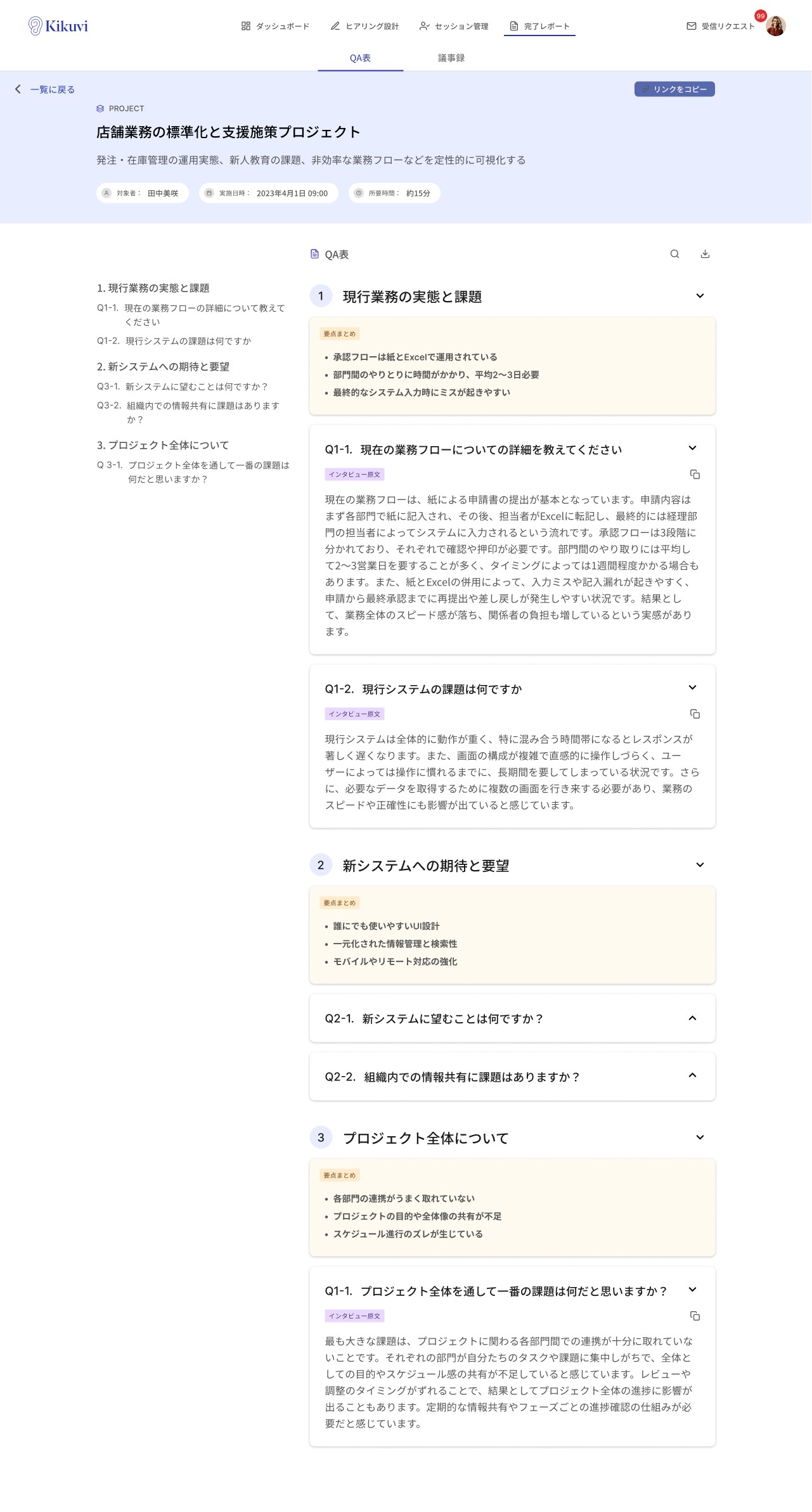
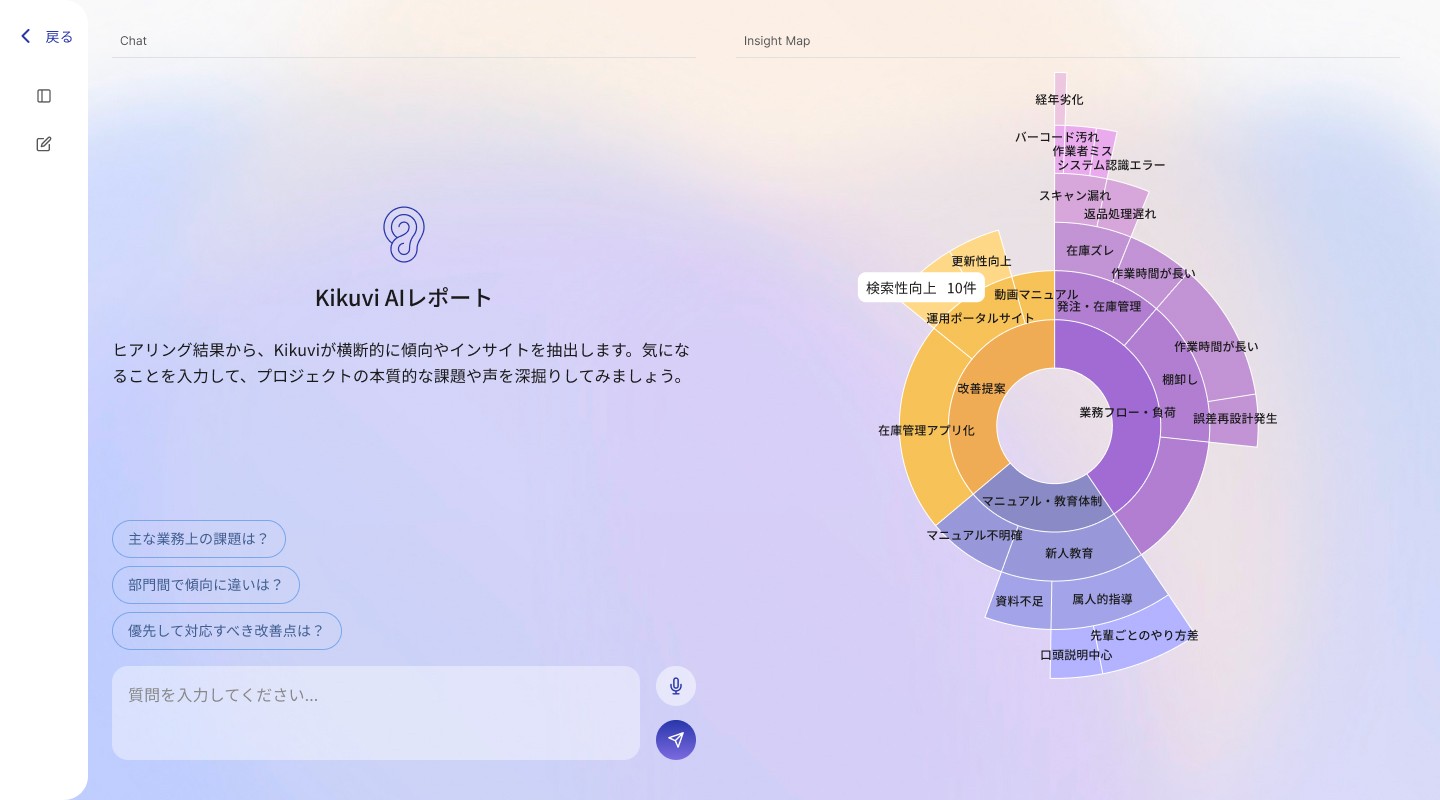
The first thing I noticed when actually using it was the speed at which the collected data is summarized. Until now, people had to painstakingly compile the results and derive the next actions. Kikuvi converts audio into text and quickly extracts key points from qualitative information.
We have long been able to process quantitative data logically, but accelerating the summarization of qualitative information directly reduces our workload and increases added value. It is still at the proof-of-concept stage, but our expectations are high.
The Value Kikuvi Brings
Q. In one word, what value does Kikuvi bring?
In a sense, it is “disruption.” It has positively broken the fixed assumption that interviews must be conducted by humans. From there, I believe it offers a new perspective—disruption and innovation, or evolution.

“By using Kikuvi to conduct in-depth interviews on the frontline about the bottlenecks identified by quantitative data, combining the two significantly improves the accuracy of management decisions.”
The Vision Ahead
Q. How do you think research and management decision-making will change going forward?
I envision a system where data accumulates naturally as work is being done. Once the data is gathered, it becomes clear where the bottlenecks are. However, data can also be misleading. It is sometimes too early to decide, based on numbers alone, “Let’s do this.”
That is where we use Kikuvi to ask the front line targeted questions about why a bottleneck exists in that specific area. By combining quantitative data with qualitative insights from Kikuvi, I expect the accuracy of management decisions to improve significantly.