How a National Program That Sent 14,000 Young People Abroad Reached the Voices It Couldn't Hear
customer
Satoru Araune
MEXT / Tobitate! (Leap for Tomorrow) Study Abroad Initiative
Project Director

A Secretariat of Only Around 30, Sending Over 1,000 Young People Abroad Every Year
"Tobitate! (Leap for Tomorrow) Study Abroad Initiative is a project launched in 2013 under the Ministry of Education, Culture, Sports, Science and Technology (MEXT) to build momentum for studying abroad. As a public-private collaboration, it has enabled a new kind of global talent development that the government could not have achieved alone. For nearly a decade we have sent more than 1,000 young people abroad every year, around 14,000 in total."
The speaker is Satoru Araune, who has been involved since the program's founding and now serves as Project Director. Reaching not only university and graduate students but high schoolers as well, across all 47 prefectures, it is one of Japan's largest study-abroad support programs.
But that very scale was the challenge.
"Grasping the needs and issues across the whole program is genuinely difficult. The secretariat is only about 30 people, so we would ask a few people from each stakeholder group for their views, and piece together a rough sense of the issues. That was the reality."
A Program That Supported 9,000 People Can't Be Changed on a Handful of Opinions
The challenge became most acute when the program underwent a major redesign.
"The first stage ran from 2014 to 2022, and we are now in the second stage. When it came time to redesign the program for that transition, changing a program that had supported nearly 9,000 people based on the opinions of just a few felt impossible. Surveys tend to be shallow, along the lines of 'Do you agree or disagree?', and don't yield deep insight. We did interview some people, but there was a limit to how many. We managed to talk to a few dozen and fed that into the improvements, but my gut feeling was that if we could have captured a wider range of voices, we could have changed more."
Araune had another vision as well.
"We have nearly 14,000 young people with remarkably diverse experiences, and there is an extraordinary amount of wisdom there. Couldn't we make that wisdom visible, share it with society, or give it back to the supporting companies? But by gathering a few people at a time to hear their views, visualizing the collective wisdom of that many people was simply impossible, no matter how much we wanted to."
Beyond the Career Survey: Meeting Kikuvi
The turning point came at the end of last year, with a large-scale career survey marking the project's tenth year.
"We had the quantitative data. But we also wanted deeper, qualitative information. With free-text answers, you only get one exchange per question. We wanted interviews that could draw out richer responses, but that just wasn't realistic. That's when we encountered Kikuvi. Being able to interview a large number of people, we used it as an extension of the career survey."
There is a fitting backstory to this encounter: Kikuvi's founder, Kento Sato, is himself a Tobitate alumnus who went abroad through the program, a graduate now helping the program evolve.
The theme they chose was the priority issue Tobitate faces today: expanding study abroad among high school students.
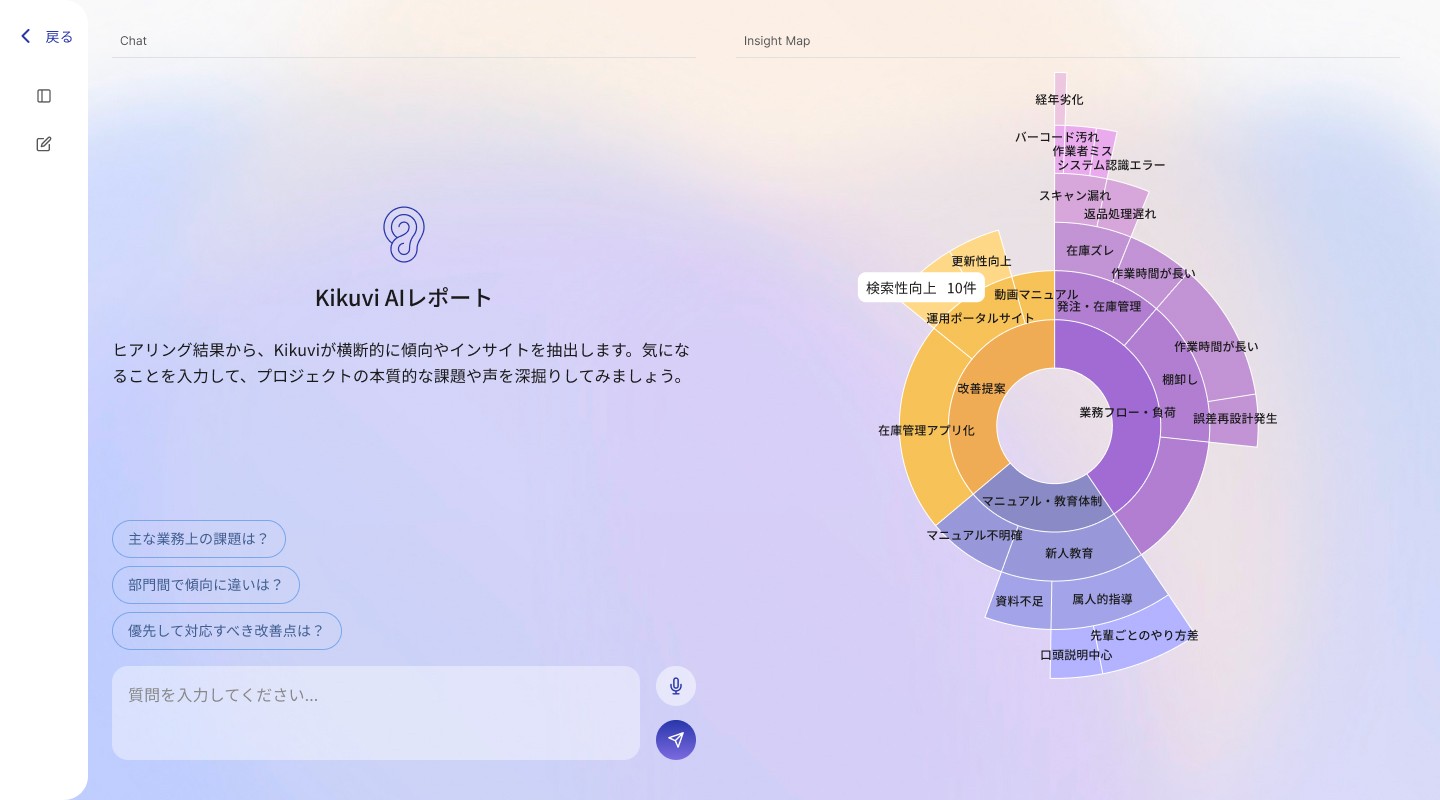
"Within that, the challenge lies with high school students in rural areas and in science tracks. But conducting many interviews with that group had been difficult. This time, we interviewed nearly 100 students from rural and science backgrounds with Kikuvi."
What 100 Voices Revealed: Role Models and Teachers
Interviews at the scale of 100 people surfaced the reality at a resolution that had been out of reach.
"Even in rural areas, students at internationally minded schools have their share of opportunities. But we found that others struggle with scarce information and few role models. Science-track students, meanwhile, are in a completely different environment from humanities students interested in going abroad, and even the way they gather information is different. That became visible."
"We could also see from the interview results that science-track students tend to be closer to their teachers. What channel works best for reaching rural students? For science students, wouldn't messages delivered through teachers reach them better? Those kinds of insights emerged."
The findings feed directly into the design of upcoming recruitment rounds and courses.

A Team Drawn from Different Industries, Now Standing on Shared Wisdom
Another value Araune points to, an unexpected one, is the effect on the secretariat itself.
"This secretariat brings together members from different industries through public-private collaboration. People who join on secondment typically leave within one or two years. Team building and knowledge sharing are genuinely hard. It used to be that knowledge like 'this is the reality for rural high school students' lived in the head of a veteran like me, and we aligned by my sharing it. Now the raw material for our discussions exists as the wisdom of this many people. Being able to debate on the basis of data that is highly reliable and highly convincing is significant, and new members can build their own ideas on top of it."
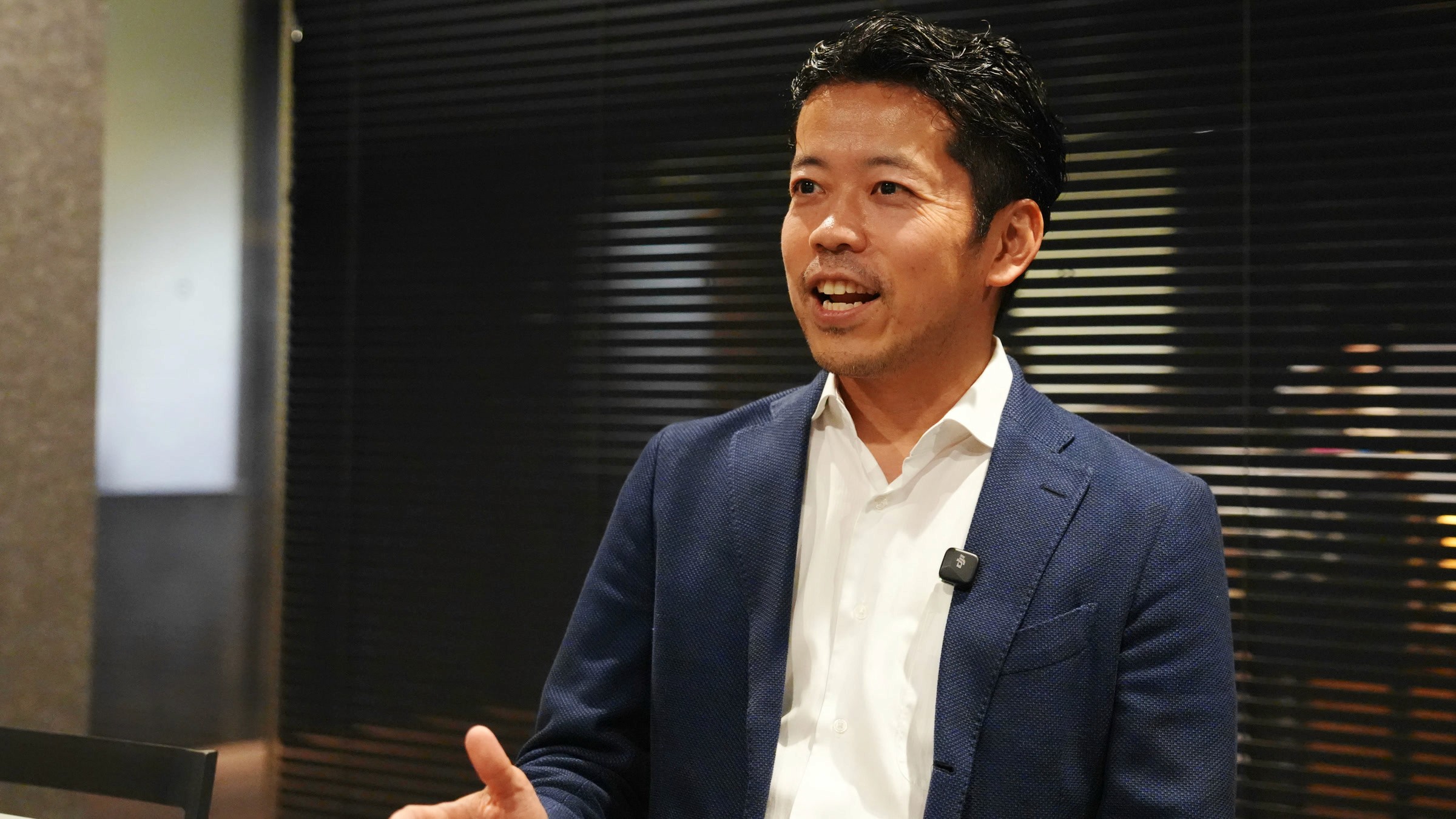
A team drawn from different industries can now hold discussions grounded in data that is both reliable and convincing. That is enormous value.
From the Tobitate Community's Wisdom to National Policy and Beyond
The outlook now extends well past program improvement.
"For example, there is a policy challenge of increasing the number of students who go on to graduate school. We could interview Tobitate alumni studying at graduate schools overseas, gather and compare the voices of those who chose Japanese versus overseas graduate schools to understand why they didn't choose a Japanese graduate school, and potentially provide that as data for MEXT policy. I hope Tobitate's data and wisdom will be put to use not only for the study-abroad program but for MEXT policy, and reach the supporting companies as well."